Alternatives guide

Best Oneko Alternatives in 2026

Last updated · every competitor fact checked against its primary source

Oneko is a public-domain X11 classic: a cat follows the mouse pointer and the program includes its own variants. The best Oneko alternative depends on whether you want to preserve that tiny Unix utility or move to a desktop pet app with 1,300+ gallery companions and an open format. OpenPets is the broader fit for Windows, macOS, and Linux.

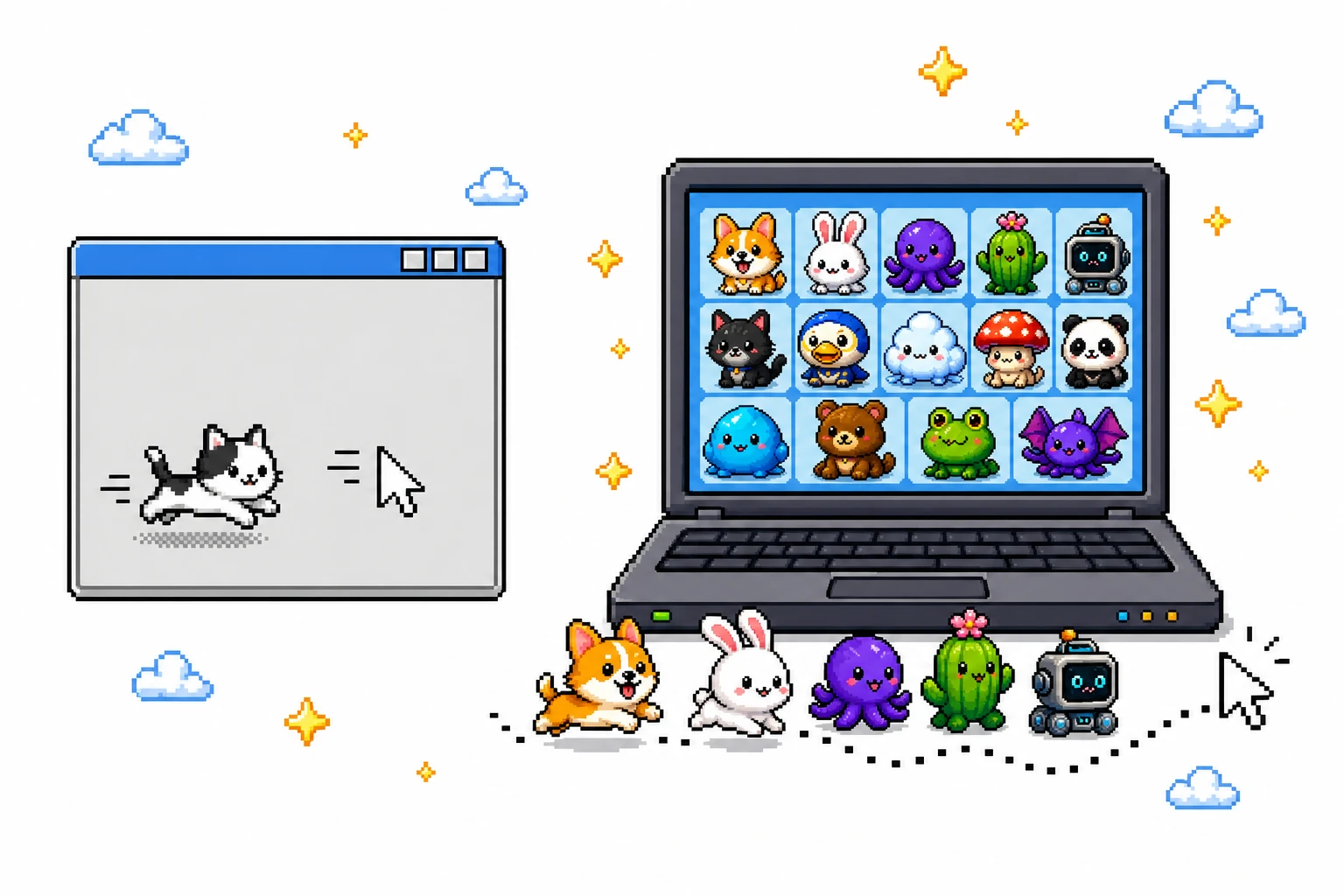
Pixel art X11 cat following a mouse pointer beside a colorful collection of OpenPets companions

TL;DR

  • Want the original tiny X11 cat? Oneko is a charming public-domain X11 program with built-in cat variants and a deliberately narrow purpose.
  • Need pets on more than an X11 desktop? OpenPets gives you a desktop pet app for Windows, macOS, and Linux, while Oneko's documented home is the X11 desktop.
  • Want to change characters without changing the program? Oneko includes its variants with the program rather than providing a runtime pet importer; OpenPets has a gallery and an open pet format.

What is Oneko?

Oneko is a small Unix desktop program built around one visual joke: a cat chases the mouse pointer across an X11 display. The tie/oneko repository identifies the project as public domain, which is unusually permissive for a desktop companion from this era.

Its character choice is deliberately finite. Oneko ships with built-in cat variants, but the researched project does not describe a runtime loader for arbitrary pet packs. That makes it a neat fit for a known X11 use case, not a gallery or an authoring platform.

Why people look for an alternative

Oneko's narrow scope is part of its charm. It is also the reason users compare it with a newer companion app:

  • X11 is a specific display environment. Oneko's documented target is X11, so users on Wayland, macOS, or Windows need to check their environment rather than assume the same program fits.
  • The variants are built in. Oneko can offer its own alternate cats, but it is not a user-facing pet-pack browser where a new character can be imported at runtime.
  • It is one cat with one central behavior. Following the pointer is the point. People looking for several companions, different behaviors, or a pet that inhabits the desktop in other ways need a different category of app.
  • Public domain does not mean a shared app format. Oneko's license makes reuse attractive, but it does not turn the program's built-in variants into an interchange format for other pet applications.

What to check before choosing Oneko

Start with the X11 requirement and the character model. If you want the historical pointer-following cat and are comfortable with its Unix context, Oneko is a direct answer. If you want to browse companions or create one without changing the application, compare an app with an explicit pet format instead.
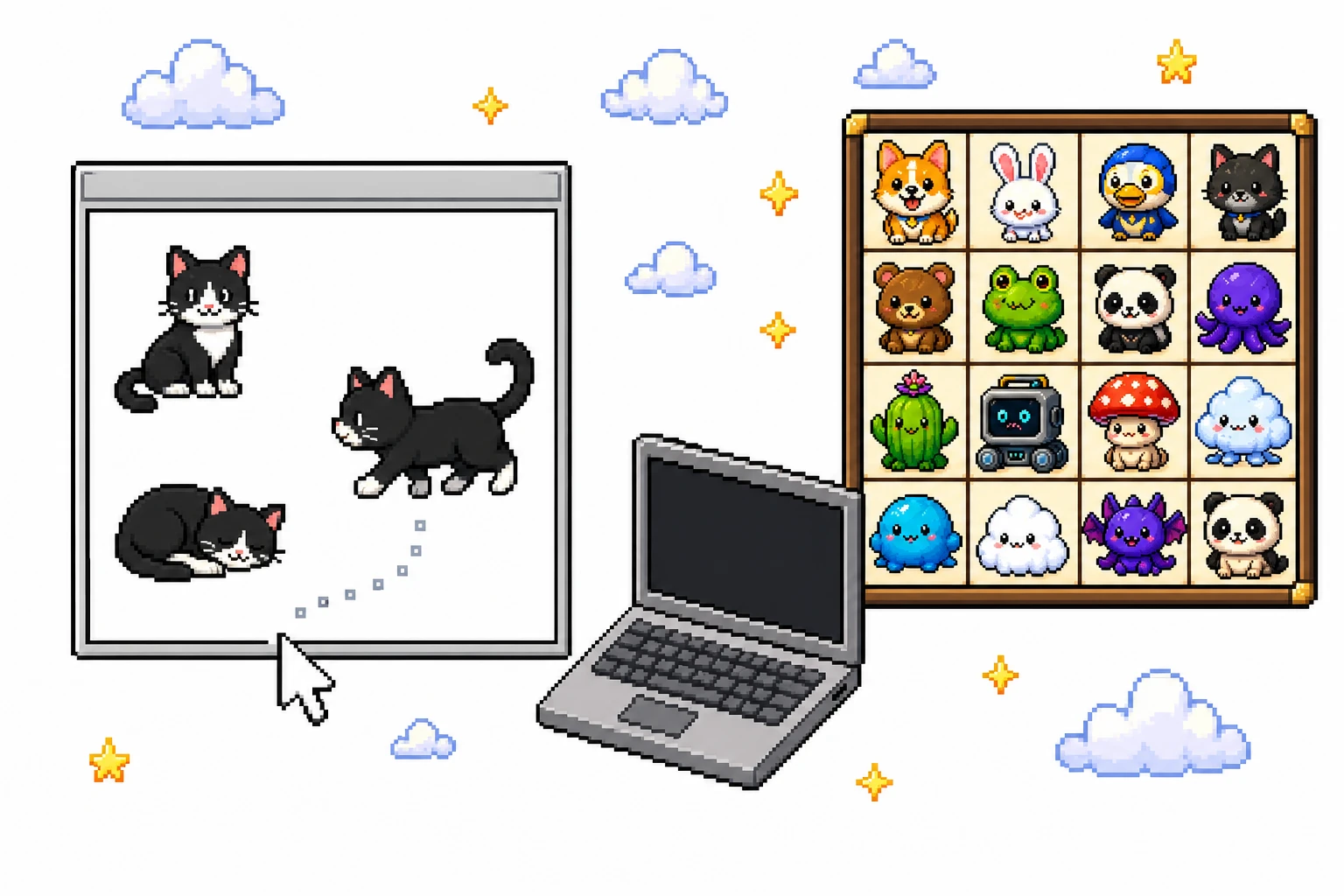

Pixel art comparison of an X11 desktop window with built-in Oneko cat variants and an OpenPets pet gallery

Oneko practical constraints

LicensePublic domain.
Display targetLinux/Unix X11.
CharactersBuilt-in cat variants.
Runtime importingNo documented custom-pet loader.

Source: tie/oneko on GitHub.

Oneko vs OpenPets

FeatureOnekoOpenPets
PriceFreeFree
Open sourcePublic domainYes (MIT license)
PlatformsLinux/Unix (X11)Windows, macOS, Linux
RuntimeNative (X11)Native app, nothing else to install
Custom petsNo runtime custom-pet loaderYes, open pet format + Plugin SDK
Multiple pets at onceNoYes
Ready-made petsBuilt-in cat variants1,300+ pets in the gallery
MaintainedDistro packages onlyActively maintained

Facts as of August 20, 2026, verified against github.com/tie/oneko repository. Spot something outdated? Tell us and we'll fix it.

The honest summary: Oneko is a public-domain X11 classic with built-in cat variants and no runtime pet loader. OpenPets is the broader option when you want a desktop pet app for Windows, macOS, and Linux, a changeable gallery, and an open format for your own companions.

Other alternatives worth considering

Oneko is intentionally small in scope. These alternatives cover the useful reasons someone might want a different kind of desktop companion:

Shijima-Qt

Windows · macOS · Linux

A native Qt reinterpretation of the Shimeji idea for people who want animated characters on current desktop systems. It is a broader mascot runner than Oneko, with a different format and community focus.

github.com/pixelomer/Shijima-Qt

Shimeji-ee

Windows (Java)

The classic Java mascot app with walking, climbing, and community character packs. It is the better comparison for users who want a character ecosystem rather than Oneko's single built-in program. .

kilkakon.com/shimeji

vscode-pets

VS Code on supported desktop and web hosts

An MIT-licensed editor extension that keeps several pets inside a VS Code panel. It suits coding sessions, but it is not an X11 desktop companion and its pets are not runtime-imported.

github.com/tonybaloney/vscode-pets

RunCat

macOS (original app)

The original proprietary macOS menu-bar app turns a runner into a status indicator. It occupies a very different place from Oneko: the menu bar rather than the X11 desktop, and official runner packs rather than built-in X11 cat variants.

kyome.io/runcat

OpenPets

Windows · macOS · Linux

A cross-platform desktop pet app with a gallery of ready-to-use companions and an open format for creating pets. It is the practical choice when Oneko's X11 scope or built-in-only character selection is too narrow.

openpets.dev

Choosing an alternative to Oneko

There is no Oneko pet pack to migrate. Decide whether the thing you want to keep is the X11 pointer-following behavior or simply the pleasure of having a small animal nearby. OpenPets covers the second use case with 1,300+ ready-to-use companions across its gallery.

  1. for Windows, macOS, or Linux.
  2. Browse the and choose a companion.
  3. Use the open pet format guide when you want to make a new pet from artwork you can share.

Keep Oneko when its public-domain X11 simplicity is the feature. Choose OpenPets when the platform range and changeable pet collection matter more.

Oneko FAQ

What is Oneko?

Oneko is a small Unix desktop program in which a cat follows the mouse pointer. The tie/oneko project is public domain and targets X11 desktops, making it a classic rather than a general-purpose pet catalog.

Does Oneko work on Wayland or macOS?

The researched Oneko implementation targets X11. Do not assume that an X11 program is a native Wayland or macOS application; users on those systems should choose a desktop pet with a matching build or display setup.

Can I add my own pet to Oneko?

Oneko has built-in variants, but the researched project does not document a runtime custom-pet loader. Adding a new character is therefore a source or build change, not a matter of dropping a pet pack into a user folder.

Is Oneko open source?

The tie/oneko project is released into the public domain. That is a different licensing label from an MIT or GPL project, but it gives the project unusually broad reuse permission compared with a proprietary desktop companion.

Can Oneko show multiple cats?

Oneko is documented as a single cat following the pointer. Its built-in variants change which cat is shown; they are not a multi-pet gallery or a panel containing several animals.

What is the best Oneko alternative?

OpenPets is the more suitable choice when you want a maintained desktop pet app across Windows, macOS, and Linux, a gallery of characters, or an open format for making a pet. Oneko remains the simpler fit when an X11 cat following the pointer is exactly what you want.

Keep exploring

An open-source desktop companion platform with animated pets and plugins.

Guides

Compare OpenPets

Legal

© 2026 OpenPets. Open source on GitHub.

A project of Boring Dystopia Development· KVK 42114878

Some pets may be unofficial fan-made content. OpenPets is not affiliated with or endorsed by third-party rights holders. Rights owners can request removal at admin@openpets.dev.